What if your notes could finally keep up with your life?
Imagine scribbling a quick reminder, only to find it exactly when you need it—no digging, no stress. Sounds simple, but how many times have you lost a thought, forgotten a task, or missed a moment because your notes weren’t where they should be? What if the right app could turn that chaos into calm? I’ve been there too. Let’s explore how the way we capture ideas is quietly transforming the way we live, work, and grow—without any tech jargon, just real help for real life.
The Messy Truth Behind Our Daily Notes
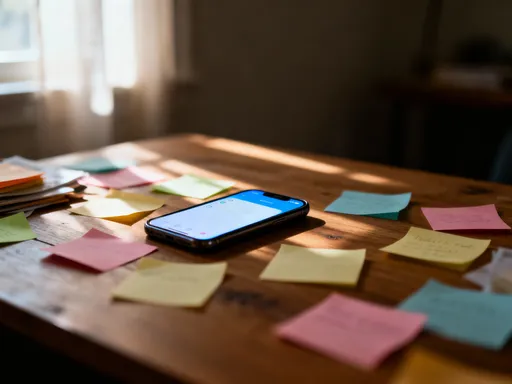
We’ve all had those mornings. You’re standing in the kitchen with your coffee, trying to remember if you added eggs to the grocery list. Was it on the sticky note under the vase? Or did you say it out loud while driving, hoping you’d remember later? Maybe you even recorded a voice memo, only to realize two days later it’s buried under five other clips titled ‘random idea’ and ‘call vet.’ Sound familiar? The truth is, most of us aren’t just managing our lives—we’re chasing after them, one scattered note at a time.
This isn’t just about being forgetful. It’s about the weight of mental clutter. Every unfinished to-do, every idea whispered into the void, adds a tiny bit of pressure. Over time, that pressure builds into something heavier: stress, frustration, even guilt. You start wondering, Am I doing enough? Am I staying on top of things? I remember one week when I missed my daughter’s parent-teacher conference because the reminder was on a napkin in my purse—long thrown away. That wasn’t just a scheduling error. It felt like a personal failure.
But here’s what I’ve learned: the problem isn’t you. It’s the tools. Pen and paper are beautiful, but they don’t talk to your phone. Voice memos are fast, but they’re hard to search. And typing notes into random apps? That’s like storing your favorite recipes in ten different cookbooks—you know they’re there, but good luck finding them when the timer’s going off. What we really need isn’t perfection. We need peace. And that starts with a system that keeps up with life, not one that falls behind every time you turn your back.
Why Simple Note-Taking Apps Make a Big Difference
You don’t need a high-tech solution to solve a human problem. What you need is something simple, reliable, and always within reach. That’s where a good note-taking app comes in—not as a fancy gadget, but as a quiet partner in your day. Think of it like your favorite apron: it doesn’t cook the meal, but it makes everything easier. A well-designed app does the same. It doesn’t think for you, but it helps your thoughts stay put.
Take cloud sync, for example. That’s just a fancy way of saying your notes go wherever you go. Write something on your phone while waiting in the school pickup line, and it’s already on your tablet when you sit down after dinner. No emailing yourself. No retyping. Just seamless continuity. I started using this when my son switched soccer teams. Instead of emailing the schedule to myself and then losing the thread, I saved it in one place—my notes app. Now, when my partner asks, ‘What time is practice?’ I don’t panic. I open the app, search ‘soccer,’ and there it is. Ten seconds, zero stress.
And let’s talk about search. How many times have you thought, ‘I wrote that down somewhere…’ only to spend ten minutes flipping through notebooks? A digital app with search turns that into seconds. Type in ‘dentist,’ and every note with that word appears. No more guessing. No more ‘I think it was on a blue sticky note.’ Plus, most apps let you add tags or organize by folders—like ‘Home,’ ‘Family,’ ‘Work,’ or ‘Recipes’—so you can create your own system without feeling boxed in.
The real magic, though, is how these small features reduce mental load. You stop holding everything in your head. You stop repeating tasks. You stop feeling like you’re one missed note away from falling apart. It’s not about being more productive—it’s about being more present. When your tools do the remembering, you’re free to focus on what really matters: your family, your goals, your peace of mind.
From Ideas to Action: How Notes Shape Personal Growth
We often think of note-taking as just recording information. But it’s also a tool for transformation. When you write down your goals, track your habits, or reflect on your progress, you’re not just taking notes—you’re building a map of your growth. I know this because I used to dream about writing a book. For years, it was just that—a dream. Then one day, I opened a blank note and typed: ‘Book idea: Stories from the kitchen table.’ I didn’t know if it would go anywhere. But I kept adding to it—snippets of conversations, memories, even quotes I loved. Slowly, it grew.
Every Sunday night, I started a new note titled ‘Weekly Wins.’ Not big achievements—just small things. ‘Made time for yoga.’ ‘Called my sister.’ ‘Finished the laundry before bedtime.’ At first, it felt silly. But over time, something shifted. I began to see patterns. I noticed when I was kind to myself. I saw how rest led to more energy. And after three months, I looked back and realized: I’d written over 20 pages of book material—without even trying.
This is the power of consistent note-taking. It turns abstract dreams into tangible progress. It helps you see how far you’ve come, even when you feel stuck. Apps make this easier by letting you date your entries, set reminders, or even add photos. I once took a picture of a garden I loved and saved it with the note, ‘Someday, my backyard will look like this.’ A year later, I used that same note to plan my first vegetable patch. The app didn’t grow the tomatoes—but it held the vision until I was ready to act.
What’s powerful isn’t the technology. It’s the habit. Writing things down makes them real. It creates accountability without judgment. And when you review your notes months later, you don’t just see what you did—you see who you’re becoming. That’s not just organization. That’s self-discovery.
Family Life, Simplified with Shared Notes
If you’ve ever been part of a family, you know: coordination is its own full-time job. Who’s picking up the kids? What’s for dinner? Did we pay the electric bill? These questions don’t come with manuals—but they do come with stress. I used to think managing a household was about remembering everything myself. Then I realized: I wasn’t just carrying the mental load. I was hoarding it.
The shift started with a simple shared grocery list. My partner and I both added items in real time—him from the pantry, me from the fridge. No more ‘I thought you were buying milk.’ No more double trips to the store. But it didn’t stop there. We created a ‘Family Hub’ note with all our important info: school schedules, doctor appointments, pet vaccinations, even the Wi-Fi password. It sounds small, but it changed everything. When my sister came to babysit, I didn’t have to send five texts. I just said, ‘Check the Family Hub.’
One of my favorite features is the ability to assign tasks. I can add ‘Change smoke detector batteries’ and tag my partner. He gets a gentle reminder, and I don’t have to nag. It sounds minor, but it’s reduced so many little tensions. We’re not keeping score—we’re sharing responsibility. And because the app keeps a history, we can look back and say, ‘We handled that flu season together,’ or ‘Remember when we planned the camping trip in one afternoon?’
For families with kids, shared notes also create a sense of involvement. My daughter has her own checklist for school mornings: ‘Backpack? Lunch? Library book?’ She checks them off on her tablet, and I can see she’s ready without hovering. It’s teaching her independence—and giving me space to breathe. These apps don’t replace conversations, but they make them better. Instead of starting with ‘Did you do X?’ we start with ‘Great job on your list today!’
In a world that often feels chaotic, shared notes become a quiet anchor. They don’t eliminate challenges, but they reduce the friction. And when the people you love are on the same page—literally—it’s easier to move forward together.
Capturing Creativity Before It Fades
Some of my best ideas have come at the worst times. Like 2 a.m., when I’m half-awake and suddenly remember the name of that book I wanted to read. Or during a walk, when a solution to a problem I’ve been stuck on clicks into place. If I don’t write it down immediately, it’s gone by breakfast. And I’ve learned the hard way: inspiration doesn’t wait.
This is where a fast, simple note app becomes a lifeline. Most have a widget or a voice command that lets you start a note in seconds—without even unlocking your phone. I use mine all the time. If I’m cooking and think, ‘What if I added rosemary to this soup?’ I say it into my phone. Later, I’ll find the note titled ‘Voice Memo – Kitchen Ideas’ and add it to my recipe journal. It’s like catching a firefly before it flies away.
But creativity isn’t just about recipes or projects. Sometimes it’s emotional. I once jotted down a note after a conversation with my mom: ‘She said, “You’ve always been strong, even when you didn’t feel it.”’ I didn’t know why I saved it. Months later, during a tough week, I stumbled on it. That one sentence gave me strength. It wasn’t just a memory—it was a gift I’d given myself.
The key is speed and accessibility. If the app is slow or complicated, you won’t use it in the moment. That’s why I don’t care about fancy formatting or dozens of features. I care that I can open it with one tap and start typing. Whether it’s a poem, a prayer, a business idea, or a joke for my nephew, I know it will be safe. And later, when I’m ready, I can organize it, expand it, or just smile and remember.
Over time, these little notes become a treasure chest of who you are. They hold your voice, your humor, your dreams. And the beautiful thing? You don’t have to be ‘creative’ to benefit. You just have to be willing to catch the moments that matter—before they slip away.
Building Trust Between You and Your Digital Mind
There was a time when I didn’t trust technology with my thoughts. I worried my notes would disappear, get hacked, or end up in the wrong hands. I’d back up everything manually, just in case. But after years of using one app consistently—seeing my notes appear across devices, survive phone upgrades, and stay private—I’ve developed something I didn’t expect: trust.
Your note app can become a true extension of your mind. Psychologists sometimes call this a ‘second brain’—a place where your thoughts live safely so your real brain can rest. But that only works if you believe it’s reliable. That means three things: consistency, privacy, and simplicity. The app should work the same way every time. You should know your data is protected. And it shouldn’t require a manual to use.
I’ve learned to trust mine because it’s always there. When I search for ‘grandma’s cookie recipe,’ it finds it—even though I wrote it three years ago in a rush. When I need to find a quote for a speech, I don’t panic. I know it’s in my ‘Inspiration’ folder. That trust has freed up so much mental space. I’m not constantly worried about forgetting. I’m not anxious about losing ideas. Instead, I can focus on thinking deeply, feeling fully, and living more intentionally.
And here’s something I didn’t expect: it’s made me kinder to myself. Before, if I forgot something, I’d think, ‘I’m so bad at this.’ Now, I just say, ‘Let me check my notes.’ There’s no shame in using tools. In fact, it’s one of the smartest things we can do. We weren’t meant to carry everything in our heads. We were meant to create, connect, and care. A good note app doesn’t replace your mind—it supports it.
Choosing the Right App Without Overthinking It
I know what you’re thinking: ‘There are so many apps. How do I pick one?’ I’ve been there. I downloaded five different ones, tried them all, and ended up more confused. Here’s what I’ve learned: you don’t need the ‘best’ app. You need the one that works for you.
Start with what you already use. If you’re on an iPhone, try the built-in Notes app. It’s simple, syncs with iCloud, and has great search. If you’re on Android, Google Keep is fast and integrates well with your calendar and email. These aren’t flashy, but they’re reliable—and that’s what matters most.
Don’t get caught up in features. You don’t need 3D animations or AI summaries. You need a blank page that saves your words. Look for three things: easy input (typing, voice, or handwriting), cloud sync, and search. If it has checklists or the ability to add photos, that’s a bonus. But keep it simple.
Here’s a tip: pick one app and try it for a week. Use it for everything—grocery lists, ideas, reminders. See how it feels. Does it slow you down? Is it hard to find things? Or does it fade into the background, doing its job quietly? If it works, stick with it. If not, try another. There’s no penalty for switching. The goal isn’t perfection. It’s peace.
And remember: you don’t have to do it all at once. Start with one list. One notebook. One habit. Over time, it will grow. The most important thing is to begin. Because every note you save is a moment of clarity, a piece of your life preserved, a step toward feeling more in control.
Notes That Do More Than Remember
At the end of the day, note-taking isn’t about technology. It’s about care. It’s about caring enough to capture a moment, honor an idea, or support your family. It’s about creating space in your mind so you can show up more fully in your life. The right app doesn’t make you smarter or busier—it makes you calmer, more centered, more like yourself.
When your notes finally keep up with your life, something shifts. You stop chasing. You start living. You remember the small joys—the way your son laughed at breakfast, the idea for a garden that turned into real tomatoes, the quiet pride of finishing a project you thought you’d never complete. These aren’t just entries in a digital notebook. They’re the threads of your story.
The best technology doesn’t shout. It doesn’t demand your attention. It simply works—quietly, reliably, kindly—so you can focus on what matters most. So go ahead. Open a note. Write one thing down. It might seem small. But it could be the start of something beautiful. Because when your tools support you, you’re free to grow, to love, to become. One note at a time.