More than dinner plans: How a simple app brought our family—and my mom—closer
You know that moment when you’re texting the group chat, asking *again* who’s coming to dinner? I did too—until I realized it wasn’t just about meals. It was about my mom, living alone, fading into quiet routines. Then we tried a shared schedule app. No fancy features. Just reminders, a few taps, and suddenly, Sunday dinners became something she counted on. It gave us more than coordination—it gave her connection. Now, when I hear her laugh from the kitchen, I don’t just think about the food. I think about how a tiny piece of technology helped bring our family back to the table—and gave my mom a reason to light up again.
The Dinner That Made Me Realize Something Was Missing
It started with a roast chicken. Nothing special—just another Sunday, or so I thought. I had texted the family group the night before: “Chicken at 6. Who’s in?” By noon, only two replies. My brother said maybe, my sister said busy, and my mom? She didn’t respond at all. I called her. “Oh, I don’t want to be in the way,” she said, her voice soft, almost apologetic. “You all have your lives.” I told her she was never in the way, of course, and she finally agreed to come. But when she arrived, the house felt heavier than usual. The kids were on their phones. My nephew had homework. My sister was still stuck in a work meeting. And there she sat, at the end of the table, smiling politely, helping clear the dishes before anyone had even finished eating.
That night, I couldn’t sleep. It wasn’t just that she came—it was how she left. Quiet. Tired. Like she’d performed her role and could now disappear. I started noticing other things: how she wore the same sweater three days in a row, how her grocery list was always for one, how she never mentioned running into neighbors anymore. She wasn’t sick. She wasn’t depressed—at least not in the clinical sense. But she was slipping into a rhythm of solitude, and no one had noticed because we were all too busy pretending we were staying connected. That’s when it hit me: We weren’t failing her because we didn’t love her. We were failing her because we weren’t *showing up*—not in a way that meant anything real.
I asked myself a hard question: What if the problem wasn’t lack of love, but lack of structure? We all meant well. We sent birthday cards, called on holidays, dropped off leftovers. But it was all reactive. No one was *planning* to be there. And for someone like my mom, who thrives on routine and belonging, that inconsistency was quietly painful. I realized we needed something simple—something that didn’t rely on memory or guilt, something that didn’t fall on just one person to organize. We needed a way to make caring feel automatic, not exhausting. And that’s when I remembered the app.
Why Family Dinners Matter More Than We Think
We talk about family dinners like they’re nostalgic—something from old TV shows or holiday cards. But they’re more than tradition. They’re one of the few consistent rituals left in our fragmented lives. For kids, they offer stability. For parents, a pause. And for older adults, they can be lifelines. Research from institutions like the National Institute on Aging shows that regular social interaction—even small, predictable moments—can slow cognitive decline, reduce feelings of loneliness, and even support better physical health. It’s not about grand gestures. It’s about showing up, week after week, and saying without words: *You matter. You’re part of this.*
But here’s the truth: in our world of back-to-back Zoom meetings, soccer practices, and grocery deliveries, these moments don’t just happen. They have to be protected. And too often, they’re the first thing to go. We tell ourselves, “We’ll do it next week,” but next week becomes next month, and then it’s been months since everyone was in the same room. The problem isn’t that we don’t care. The problem is that caring takes effort—and effort fades when life gets loud.
What I began to understand was that consistency is kindness. For my mom, knowing she had a place at the table every Sunday wasn’t just about the meal. It was about having something to look forward to. A reason to put on her favorite dress. To comb her hair. To leave the house. It gave her a rhythm, a sense of purpose. And when that rhythm disappeared, so did a little piece of her confidence. I didn’t want to wait until she stopped coming altogether to fix it. I wanted to build something before the silence grew too deep.
The Problem with “Just Call Her”
How many times have we said it? “I’ll call Mom tomorrow.” “I should check in.” “I’ll text her when things slow down.” And how many times does that promise dissolve into the noise of the day? I’ve done it. We all have. The intention is real, but the execution fails because it depends on memory, energy, and perfect timing—three things we rarely have in abundance. I used to be the one carrying the mental load: remembering her doctor’s appointments, calling when she seemed down, organizing visits. But that wasn’t fair—to me, and definitely not to her. It made caregiving feel like a burden, not a shared responsibility.
And here’s what no one talks about: guilt. When you’re the only one checking in, every missed call feels like a failure. Every quiet week feels like neglect. I’d lie in bed, thinking, *Did she eat today? Is she lonely? Did I forget to call on her birthday again?* And then I’d scramble to make it up with a rushed visit or a gift that felt more like penance than love. That’s not care. That’s crisis management. What we needed was a system that didn’t rely on heroics or last-minute fixes. We needed something gentle, automatic, and inclusive—something that let everyone participate, not just the person who felt most responsible.
I realized that “just calling” wasn’t enough. We needed to build care into our routines, not squeeze it in when we remembered. We needed to stop relying on emotional labor falling on one person and start sharing the load. And that meant using tools—not because we were cold or tech-obsessed, but because we were human, and we needed help staying human.
How a Simple Schedule App Changed Everything
I won’t lie—I was skeptical at first. I’ve downloaded plenty of “family organizer” apps that ended up collecting digital dust. But this time, I kept it stupidly simple. I picked a shared calendar app—nothing flashy, no bells or whistles. Just a place where we could all see what was coming up. I created a recurring event: “Family Dinner – Sunday, 6 PM.” I added everyone: my siblings, my kids, even my cousin who lives two hours away. Then I sat down with my mom and showed her how to use it.
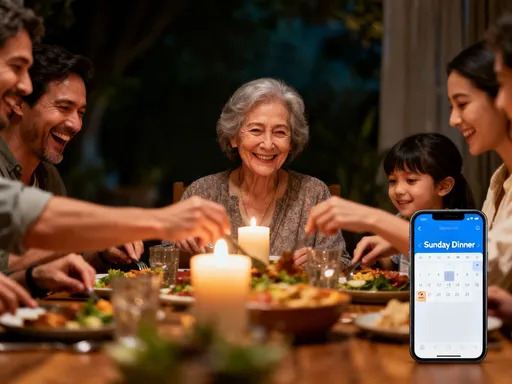
At first, she said, “Oh, I don’t need to be on that thing. You’ll tell me when to come.” But I insisted. “Just tap this button if you’re coming. Green means yes, gray means no. That’s it.” I showed her how the app would send a reminder the day before. No pressure. No nagging. Just a little notification that said, “Family dinner tomorrow—tap to confirm.” And something shifted. The first time she tapped “going,” she smiled. Not a polite smile. A real one. Like she’d done something important. And she had. She’d claimed her spot.
Suddenly, Sunday wasn’t just something that happened to her. It was something she was part of. She started marking her own errands on the calendar. “I’m getting my hair done Saturday,” she’d say. “So I’ll be fresh for dinner.” She began adding notes: “Bring the potato salad recipe!” or “Can someone pick up bread?” The app didn’t replace conversation—it made conversation easier. And for the first time in years, I saw her planning ahead, not just reacting.
Making Tech Work for Non-Tech-Savvy Loved Ones
The secret wasn’t the app. It was how we introduced it. I didn’t hand her a phone and say, “Figure it out.” We sat at her kitchen table with tea and cookies, just like we used to when I was a kid. My nephew, who’s great with tech, showed her the two things she needed to know: how to open the app and how to tap “going.” We printed a simple guide—big font, step-by-step, taped to her fridge. We turned it into a ritual: “Check the calendar, then pour the tea.” Within a week, she was doing it on her own.
The lesson? Tech works when it feels human. It’s not about features. It’s about trust, patience, and making space for learning. We didn’t rush her. We celebrated small wins. “You did it!” we’d say when she confirmed her attendance. And slowly, her confidence grew. She started using the app for other things—her doctor’s visits, her book club meetings. It became her tool, not ours. And that made all the difference.
I’ve seen families give tablets to older relatives with a quick tutorial and then wonder why they never use them. But technology isn’t magic. It’s a bridge. And bridges only work if someone walks you across. We didn’t just give my mom an app. We gave her support, dignity, and the message: *You’re worth the time.*
Beyond the Dinner Table: Ripple Effects on Mom’s Well-Being
What started as a dinner reminder turned into something much bigger. Within weeks, I noticed changes—not just in her mood, but in her daily life. She started shopping on Fridays again, not just for basics, but for ingredients. “I’m making the apple pie everyone likes,” she told me. She began dressing up—not just for dinner, but for her walks around the neighborhood. “People notice when you look nice,” she said with a wink.
But the biggest change was in her energy. She was more engaged. More curious. She started inviting her neighbor over for coffee after dinner. Then another. Then a small group from her church. The Sunday meal wasn’t just for family anymore—it was becoming a little community event. Her doctor even commented on her progress. “You seem more alert,” he said at her last checkup. “Sleeping better?” She nodded. “I have something to look forward to now.”
It wasn’t the app that healed her. It was the routine, the sense of belonging, the small but steady stream of connection. The app just made it possible. It gave her a role. A reason to care. And in return, she gave us something priceless: her joy.
Building a Care Network That Feels Light, Not Heavy
Now, the calendar does more than track dinners. My sister adds holiday plans in July. My cousin reminds everyone about birthdays. My niece marks her choir performances. The app holds the memory so we don’t have to. And Mom? She checks it every morning with her tea. If there’s a change, she texts the group. “I’ll be at the dentist, so I’ll be late,” or “I’m bringing extra rolls!”
What’s changed is how we share responsibility. It’s not on me anymore. It’s on all of us. And because it’s shared, it feels lighter. Less like duty, more like love in motion. We’re not perfect—we still miss events, forget to confirm, double-book. But now, when something slips, it’s not a crisis. It’s just a quick edit on the calendar. No guilt. No blame. Just adjustment.
And for Mom, it means she’s not being “managed.” She’s being included. Her presence is expected, not requested. Her voice matters. Her plans are seen. That’s the difference between care that feels clinical and care that feels like family. We’re not using tech to replace human connection. We’re using it to make human connection easier to maintain.
The Quiet Power of Showing Up—With Help
This wasn’t a tech breakthrough. It was a human one. The app didn’t create love. It didn’t invent family. But it did something powerful: it lowered the barrier to caring. It made it simple to say, “I’m here,” without having to say it at all. In a world that celebrates speed, productivity, and constant innovation, sometimes the most meaningful technology is the one that helps us slow down and simply *be there*.
For my mom, that Sunday dinner isn’t just a meal. It’s a promise. A thread that ties her to us, and us to her. And for all of us, it’s a reminder that care doesn’t have to be complicated. It doesn’t have to be heroic. It just has to be consistent. Regular. Visible. And sometimes, all it takes is a little reminder, a shared calendar, and the courage to say: *We’re not letting you fade into the quiet.*
If you’re reading this and thinking about your own parent, your aunt, your neighbor—someone who might be slipping into the background—know this: you don’t need a big intervention. You don’t need to overhaul your life. You just need one small, steady thing. One ritual. One tool. One moment a week where they know, without a doubt, that they belong. Because connection isn’t built in grand gestures. It’s built in the quiet, repeated acts of showing up. And sometimes, all we need is a little help to remember how.